
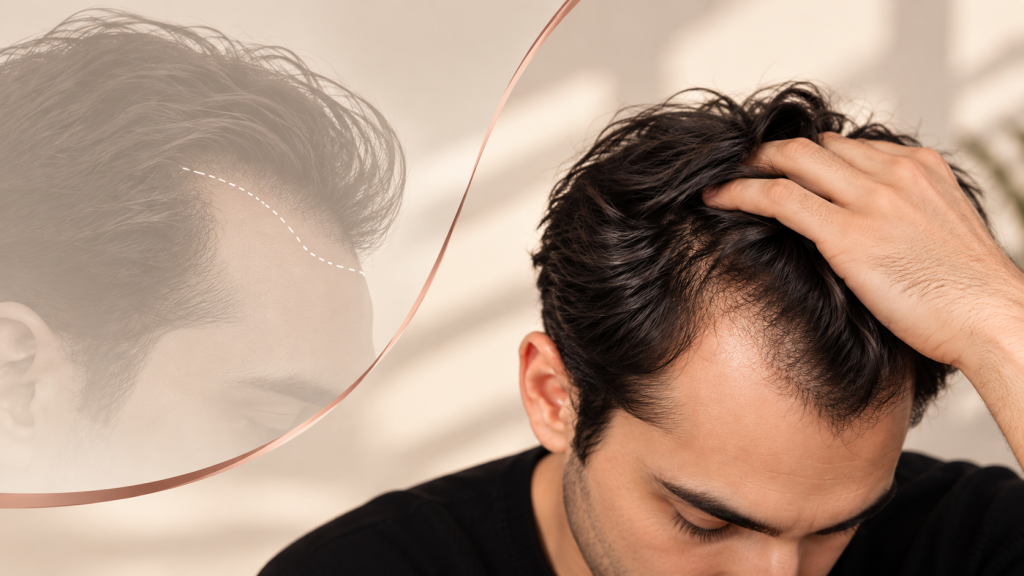
Receding Hairline? Causes, Early Signs & Treatment Options
Noticing your hairline moving backward? A receding hairline is common, particularly in men, but it can have several different causes. Understanding the reason behind it is the first step toward choosing the right treatment.
What Causes a Receding Hairline?
Male Pattern Hair Loss
One of the most common causes is androgenetic alopecia, or male pattern hair loss. It is influenced by genetics and hormones and often begins around the temples.
Genetics
If hair loss runs in your family, you may be more likely to experience a similar pattern. However, the timing and severity can vary from person to person.
Stress & Illness
Periods of significant stress, illness, fever, or major changes in your body can trigger increased hair shedding.
Nutritional Deficiencies
Low levels of certain nutrients can contribute to hair thinning. A dermatologist can determine whether testing is appropriate for you.
Hair Damage & Traction
Constant pulling from tight hairstyles or excessive styling can put stress on the hairline and contribute to hair loss.
Early Signs to Watch For
You may notice:
- Receding temples
- An increasingly visible hairline
- Thinning at the front of the scalp
- An “M-shaped” hairline becoming more noticeable
- Increased hair shedding
- Gradual changes when comparing older and newer photos
Can a Receding Hairline Be Treated?
Yes, but treatment depends on the cause and stage of hair loss.
Depending on your condition, a dermatologist may recommend medical treatments, topical treatments, PRP therapy, or other hair-restoration options.
The earlier the cause is identified, the better the opportunity to protect existing hair.
When Should You See a Dermatologist?
Don’t wait until significant hair loss has occurred. If you notice your hairline progressively moving backward or your hair becoming thinner, a dermatologist can examine your scalp and determine the underlying cause.
Your Hairline Is Worth Paying Attention To
A receding hairline isn’t always simply a sign of aging. Early changes can sometimes indicate progressive hair loss that deserves attention.
Not sure what’s causing your hair loss? Book a consultation with Dr. Subheen Fatima for a professional assessment of your hair and scalp.

Dermatologist & Aesthetic Physician, Healthy skin, timeless beauty through evidence-based care.