
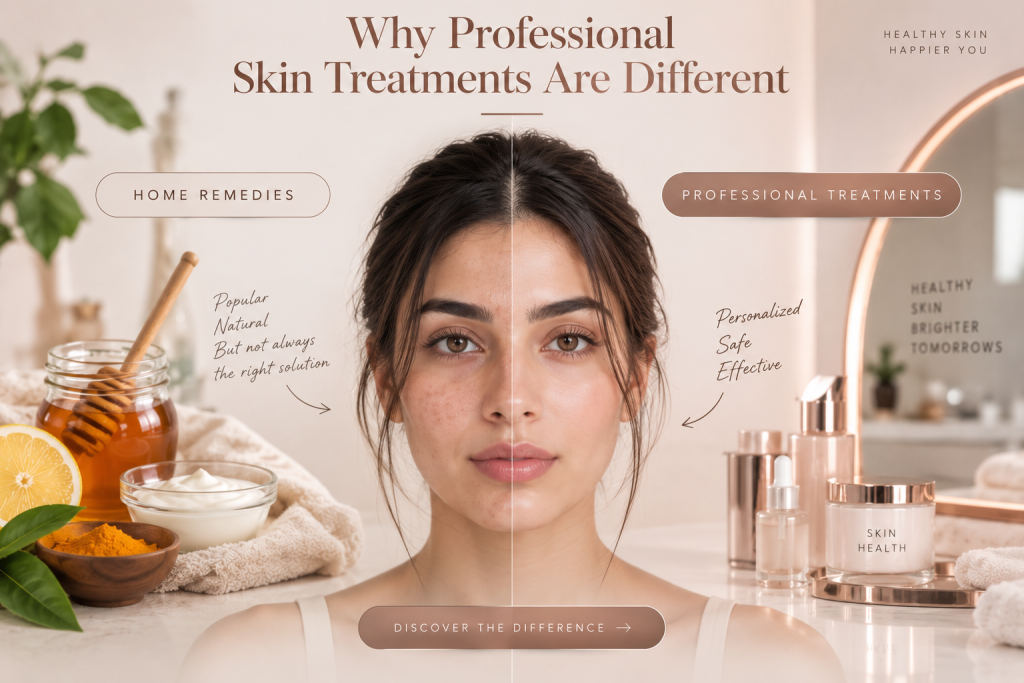
Why Professional Skin Treatments Are Different From Home Remedies
By Dr. Subheen Fatima | Dermatologist & Skin Specialist
Clear, healthy skin is not about finding the most popular skincare hack. It is about understanding what your skin needs and choosing treatments that are appropriate for it.
Home remedies have been used for generations. Ingredients such as honey, yogurt, aloe vera and turmeric may be used in traditional skincare, and some can have soothing or moisturizing properties. However, a home remedy cannot diagnose the cause of a skin problem or provide a treatment plan tailored to your skin.
This is where professional dermatological care is different.
Understanding the Cause Matters
Many skin concerns can look similar but have very different causes.
Dark patches, for example, may be related to sun exposure, acne, hormonal changes or conditions such as melasma. Similarly, not every breakout is the same type of acne, and different types of acne can require different treatments.
A dermatologist assesses the skin, considers your medical and skincare history, and identifies the underlying concern before recommending treatment.
The goal is not simply to treat what is visible on the surface. It is to understand why it is happening.
Professional Treatments Are Selected for Your Skin
Professional dermatology treatments are not one size fits all.
Depending on the condition, a dermatologist may recommend medical skincare, chemical peels, microneedling, laser treatments or other procedures. The choice depends on factors such as skin type, sensitivity, severity of the concern and previous treatment history.
For example, a treatment that may be appropriate for certain acne scars may not be suitable for active acne. Likewise, pigmentation requires careful treatment because excessive irritation can sometimes make pigmentation more noticeable, particularly in individuals who are prone to post inflammatory hyperpigmentation.
A professional treatment plan takes these factors into account.
Natural Does Not Always Mean Safe
One of the most common misconceptions in skincare is that natural ingredients are automatically safe.
They are not.
For example, applying lemon juice directly to the skin can cause irritation and increase sensitivity to sunlight. Harsh scrubs can also damage the skin barrier, leading to dryness, redness and increased sensitivity.
The same applies to viral skincare trends. An ingredient or technique that appears harmless in a social media video may not be appropriate for every skin type.
If a product causes persistent burning, swelling, significant redness or irritation, it should be discontinued and assessed by a healthcare professional when necessary.
Professional Care Is More Than a Procedure
Seeing a dermatologist does not always mean having a procedure.
In many cases, improving the basics can make a significant difference. A dermatologist may recommend a simple routine involving a suitable cleanser, moisturizer, sunscreen and targeted treatment.
For conditions such as acne or pigmentation, treatment may also involve prescription medication or professional procedures when appropriate.
The important part is that each component has a purpose.
What Makes Dermatologist Guided Treatment Different?
Professional dermatological care provides several advantages that home remedies cannot consistently offer.
A dermatologist can:
• Identify the underlying skin concern
• Assess your skin type and sensitivity
• Recommend evidence based treatment options
• Select appropriate treatment combinations
• Adjust treatment according to your response
• Help prevent unnecessary irritation
• Monitor progress over time
This is particularly important for persistent acne, pigmentation, scarring and other conditions that may worsen when treated incorrectly.
When Should You Consult a Dermatologist?
Consider seeking professional advice if you have acne that keeps returning, pigmentation that is not improving, persistent irritation, noticeable acne scarring, sudden changes in your skin or a reaction to a skincare product.
You also do not need to wait until a skin concern becomes severe. Early assessment can help you understand the problem and avoid unnecessary treatments.
The Bottom Line
Home remedies may be simple and convenient, but they are not a substitute for diagnosis and individualized dermatological care.
Healthy skin is not about using more products. It is about using the right approach consistently and safely.
If you are dealing with acne, pigmentation, acne scars, uneven texture or another persistent skin concern, Dr. Subheen Fatima can assess your skin and recommend an appropriate treatment plan based on your individual needs.
Dr. Subheen Fatima
Dermatologist & Skin Specialist

Dermatologist & Aesthetic Physician, Healthy skin, timeless beauty through evidence-based care.