
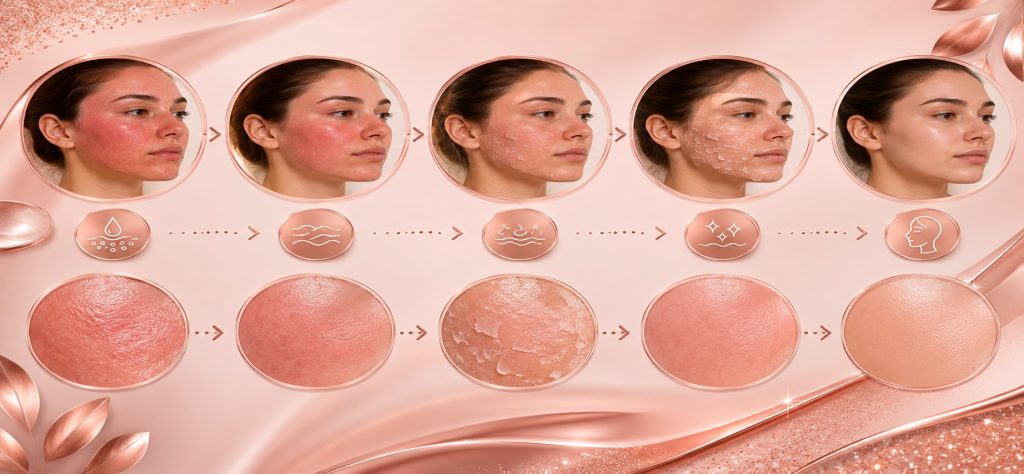
You booked the peel, you know it’ll help but nobody really tells you what the days after actually look like. Here’s a realistic, day by day breakdown so you know what’s normal, what to expect, and when to actually worry.
Day 0: Right After the Peel
Skin feels tight, warm, and looks flushed like a moderate sunburn. Some peels leave a visible white “frosting” immediately after application, which fades within an hour or two. Mild stinging is normal; sharp pain is not.
What to do: Follow your provider’s post-care instructions exactly usually a gentle cleanser, a bland moisturizer, and zero actives.
Day 1–2: Redness and Tightness Peak
Skin looks noticeably red, feels tight, and may swell slightly (especially around the eyes for facial peels). This is inflammation doing its job it’s uncomfortable, not dangerous.
What to do: Keep skin moisturized and avoid touching, picking, or applying anything not explicitly approved. Sleep with your head slightly elevated if swelling is bothering you.
Day 3–4: Peeling Begins
This is the part people brace for skin starts to visibly flake and peel, usually starting around the mouth and nose. It can look dramatic even when it’s completely normal.
What to do: Let it peel on its own. Picking at flaking skin is the single biggest risk factor for scarring or post-inflammatory hyperpigmentation even if a piece looks “ready” to come off.
Day 5–7: Peak Peeling and New Skin Emerging
Peeling continues, and you’ll start to see fresher, pinker skin underneath. Some areas may finish peeling faster than others, which can look patchy for a day or two.
What to do: Keep up gentle hydration. New skin is more vulnerable, so this is a strict no-actives, high SPF window.
Day 7–10: Skin Settles
For most medium peels, visible peeling has mostly finished by day 7–10. Skin may still look slightly pink but is generally back to a “presentable” state. Full results (brighter tone, smoother texture) continue to develop over the following weeks as collagen remodeling continues.
What to do: You can usually reintroduce gentle actives around this point, but confirm timing with your provider everyone’s skin recovers at a different pace.
How Superficial Peels Differ
Superficial peels (like a light glycolic or salicylic peel) usually skip the dramatic flaking stage entirely you might just see mild, fine flaking for a day or two, or no visible peeling at all despite the skin still benefiting underneath. Don’t judge a superficial peel’s effectiveness by how much it visibly peels.
Red Flags: When to Contact Your Provider
- Peeling accompanied by significant pain, not just tightness
- Signs of infection: increasing redness, warmth, pus, or fever
- Blistering (beyond normal frosting/flaking)
- Peeling that hasn’t started to improve by day 10–14

Dermatologist & Aesthetic Physician, Healthy skin, timeless beauty through evidence-based care.