Adult Acne vs. Teenage Acne: What’s the Difference?
Acne is often thought of as a teenage problem something you outgrow once your school years are behind you. But for many people, breakouts don’t stop at graduation. In fact, adult acne is increasingly common, and it behaves quite differently from the acne you might remember from your teenage years.
Understanding these differences is the first step toward getting the right treatment.
Teenage Acne: What Causes It
Teenage acne typically begins during puberty, when hormonal changes cause the body’s oil (sebum) glands to become more active. This excess oil, combined with dead skin cells and bacteria, clogs pores and leads to breakouts.
Common characteristics of teenage acne
- Usually appears on the T-zone (forehead, nose, and chin)
- Often includes blackheads and whiteheads
- Tends to improve as hormone levels stabilize in the late teens or early twenties
- Affects a large percentage of teenagers, regardless of gender
Adult Acne: What Causes It
Adult acne, on the other hand, tends to show up differently and the causes can be more varied. It’s more common in women than men and is often linked to hormonal fluctuations from menstrual cycles, pregnancy, or conditions like PCOS. Stress, certain medications, and skincare or makeup products can also play a role.
Common characteristics of adult acne:
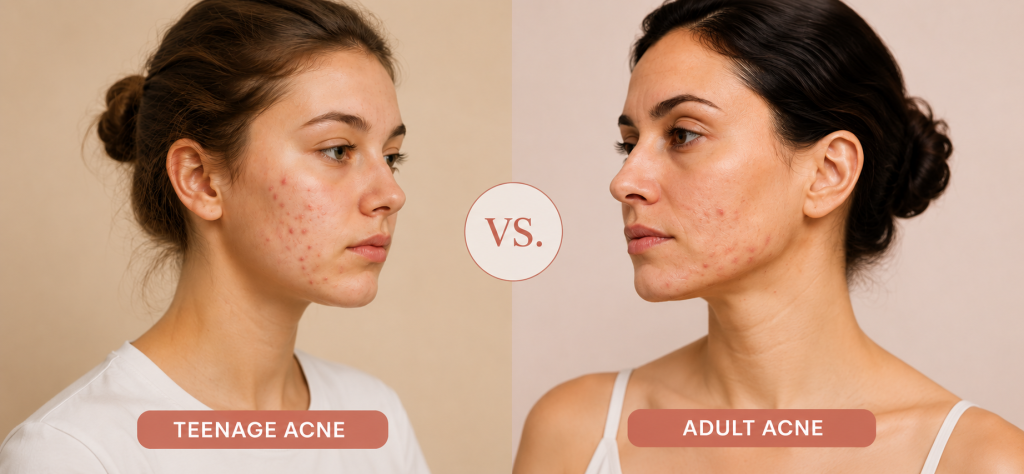
- Often appears along the jawline, chin, and lower face
- Tends to be deeper, more inflamed, and cystic rather than surface-level
- Can be linked to hormonal imbalances, stress, or underlying conditions
- May persist for years or come and go in cycles
Key Differences at a Glance
| Feature | Teenage Acne | Adult Acne |
| Typical onset | Puberty | 20s–40s+ |
| Common location | T-zone | Jawline, chin |
| Texture | Blackheads, whiteheads | Deep, cystic breakouts |
| Main cause | Hormonal surges | Hormonal fluctuations, stress, PCOS |
| Duration | Often resolves with age | Can be chronic or recurring |
Why the Difference Matters for Treatment
Because the underlying causes differ, treatment approaches often need to differ too. What works well for a teenager’s oily T-zone breakouts may not be effective or appropriate for an adult dealing with hormonal, cystic acne. A proper evaluation helps identify the root cause and determine the most effective treatment plan, whether that involves topical treatments, oral medications, hormonal therapy, or lifestyle adjustments.
When to See a Dermatologist
If your acne is persistent, painful, leaving scars, or not responding to over-the-counter products, it’s worth seeking professional care. A dermatologist can help identify what’s driving your breakouts and create a personalized treatment plan whatever your age.

Dermatologist & Aesthetic Physician, Healthy skin, timeless beauty through evidence-based care.